- Cybersecurity
-
-
PARTNERS
- Homeland Security
-
-
HOMELAND SECURITY
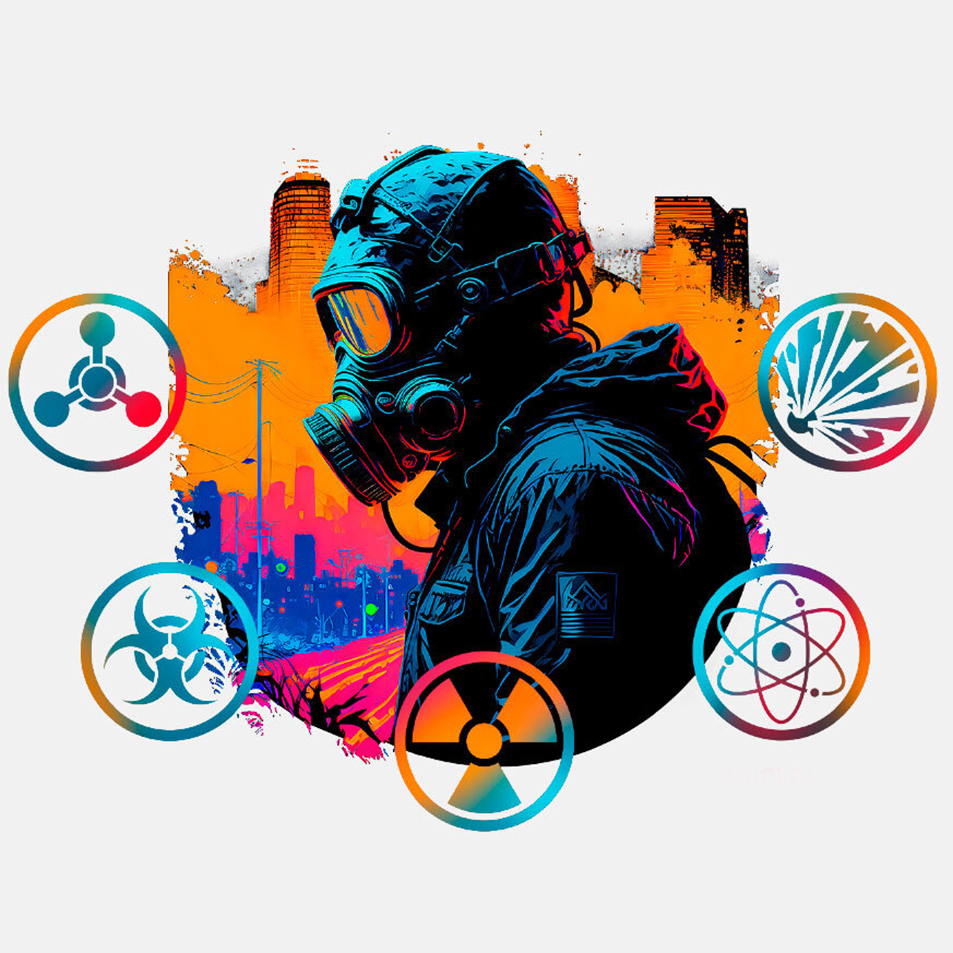
Chemical. Biological. Radiological. Nuclear. Explosive. WMDs. Asymmetric Threats.
The CBRNE-WMD credentials program is a robust training series designed to prepare early and developing professionals for the complexities of a dynamic and evolving threat environment. Three interdependent certificates that deal with policy, mitigation, and emerging threats will propel you towards an immersive capstone in Washington, D.C. and the next steps in your career protecting our nation.
-
-
Stronger Together
Converging Threats & Shared Defenses
Modern infrastructure is digital, physical, and deeply interconnected. Protecting it requires more than securing networks—it requires safeguarding the systems and environments that sustain society.
Cybersecurity protects the information that enables infrastructure to operate. CBRNE is about identifying threats, mitigating disaster, and thinking outside of the box.
Together, they form the foundation of modern infrastructure resilience. The Stronger Together Initiative brings the experts to the table.
CTAThe 21st-Century Threat Environment
CYBER THREATS
Speed. Scale. Asymmetry. These are what define 21st-century cyberthreats. State and non-state actors exploit interconnected systems to disrupt operations, steal sensitive data, and undermine trust in institutions. Attacks increasingly target not just information systems but the digital backbone of society—energy grids, financial networks, healthcare platforms, and transportation systems. The proliferation of ransomware, supply chain compromises, and AI-enabled attacks demonstrates that cyber risk is no longer confined to the virtual domain; it is persistent, adaptive, and capable of generating real-world consequences.
PHYSICAL THREATS
Physical threats remain immediate and tangible, ranging from terrorism and sabotage to natural disasters and infrastructure failure. However, these threats are increasingly shaped by digital dependencies, where physical systems rely on networked controls and real-time data. Critical infrastructure—spanning energy, water, transportation, and emergency services—lies at the convergence of cyber and physical domains. This interdependence creates cascading vulnerabilities, where disruption in one domain amplifies risk in the other, underscoring the need for integrated, cross-sector approaches to security and resilience.
Ransomware attacks on hospital systems, intrusions into industrial control systems, and coordinated disinformation campaigns. Attacks on transportation hubs, power grid sabotage, and extreme weather events are impacting infrastructure. Increasingly, these threats overlap, highlighting the need for collaborative defense strategies.
Triton. Colonial Pipeline. Oldsmar. Viasat KA-SAT. SolarWinds. US Dams. Ukraine power grid.
Protecting the homeland is no longer just about protecting the physical space; the borders and ports of entry. Cybersecurity is a FORCE MULTIPLIER, allowing adversaries to attack on multiple fronts to achieve catastrophic results from increasingly simple and readily-available materials and components.
The GW Nexus
At The George Washington University, we are committed to forward-thinking innovation and enduring professional partnerships with industry leaders to collaboratively address emerging challenges and shape the future of practice. Our commitment to modern, adaptable learning prepares students for lifelong professional success. Ed tech enhancements, immersive experiences, and strategic initiatives in career services, online learning, and partnerships.
GW RevU CBRNE Program
Chemical. Biological. Radiological. Nuclear. Explosive. WMDs. Asymmetric Threats.
The CBRNE-WMD credentials program is a robust training series designed to prepare early and developing professionals for the complexities of a dynamic and evolving threat environment. Three interdependent certificates that deal with policy, mitigation, and emerging threats will propel you towards an immersive capstone in Washington, D.C. and the next steps in your career protecting our nation.
CBRNE Program
Cybersecurity, Stronger Together
Converging Threats. Shared Defenses
The George Washington University’s College of Professional Studies (CPS), and The Cyber Guild have joined forces to bring together leaders, experts, and innovators in the cybersecurity space through the Cybersecurity, Stronger Together Conference series. This collaborative annual event has quickly become a cornerstone for fostering dialogue, driving innovation, and strengthening partnerships across sectors to combat emerging cyber threats.
2026 Conference ProgramStronger. Together
No single discipline can protect modern infrastructure alone. When these communities work together—along with infrastructure operators, government agencies, and researchers—they create a stronger system for anticipating risk and responding to crises.
Resilience emerges from shared awareness and coordinated action.
Positioned in Washington, D.C. and the District of Columbia, Maryland, and Virginia region, George Washington University College of Professional Studies occupies a uniquely strategic nexus of public, private, and nonprofit engagement. Its proximity to federal agencies, industry leaders, and mission-driven organizations enables it to convene diverse stakeholders around shared cyber and physical security challenges. This positioning allows GW CPS to cultivate a collaborative thought space where cross-sector expertise, applied research, and workforce development intersect to address the complexities of the modern threat environment and advance integrated resilience strategies.
#cybersafety
SAVE THE DATE
April 2027
CYBERSECURITY, STRONGER TOGETHER 2027
Co-Sponsored by GW’s College of Professional Studies and The Cyber Guild


Georgie
- Homeland Security
-
-