- Cybersecurity
-
-
PARTNERS
- Homeland Security
-
-
HOMELAND SECURITY
Chemical. Biological. Radiological. Nuclear. Explosive. WMDs. Asymmetric Threats.
The CBRNE-WMD credentials program is a robust training series designed to prepare early and developing professionals for the complexities of a dynamic and evolving threat environment. Three interdependent certificates that deal with policy, mitigation, and emerging threats will propel you towards an immersive capstone in Washington, D.C. and the next steps in your career protecting our nation.
-
-
CBRNE-WMD Medical Management and Pre-Hospital Micro-Credential
Prepare to lead the charge in emergency medical readiness with our comprehensive course on CBRNE-WMD Medical Response and Pre-Hospital Considerations. This course explores the full spectrum of Chemical, Biological, Radiological, Nuclear, and Explosive threats, emphasizing classification, early detection, contamination challenges, patient assessment, decontamination protocols, and medical countermeasures. Participants will gain in-depth knowledge of agent-specific pathophysiology, triage systems like SALT and START, and the critical roles of PPE and scene safety. This training equips you with practical skills and decision-making tools to respond effectively to mass casualty incidents.
Start your journey toward becoming a CBRNE-WMD subject matter expert today.
Next Cohorts Start
January 2027
Pricing
Micro-Credential Cost: $399
- 10% GWU employee and alumni discount
- 10% discount for organizations that send three or more participants
- All-inclusive pricing—all readings, media, and platform fees included.
For questions about pricing and discounts, don’t hesitate to contact revu@gwu.edu for more details.
Registration deadlines
Apply Now!
For questions about applying or registration, don’t hesitate to contact revu@gwu.edu for more details.
WHAT YOU EARN
- 40 contact hours to apply towards your professional development
- The ability to critically assess complex problems involving emerging technologies
- Skills in crisis response, interagency coordination, and Co-op
- A digital badge, Continuing Education Hours, and a GW RevU Micro-Certificate
- The prestige that GW- and industry-certified credentials add to your CV
Visit the Continuing Education Hours page for more details about how GW RevU will support your professional development journey.
Learners Will Complete 40 Contact Hours “…we must develop the needed leadership to recognize and synthesize the complex and oftentime ambiguous CBRNE threat landscape…”
Bobby baker, CBRNE Training Specialist Global Security Division and Homeland Security advisory Panel memberApplication Requirements
To be eligible for the GW RevU Micro-Credential Program, applicants must meet the following minimum requirements.
- Academic and Professional Standing: Applicants must be in good professional standing and have been actively working in their field of study or service for at least two years.
- Professional Background: Candidates with relevant experience in fields such as healthcare, public health, emergency management, law enforcement, security, engineering, environmental sciences, elected officials, telecommunications, or any other discipline associated with private sector or governmental roles in CBRNE (Chemical, Biological, Radiological, Nuclear, and Explosive) threat detection, mitigation, or consequence management are eligible for consideration.
- Submission of Documents: Each applicant is required to submit a current resume outlining their professional experience. Additionally, a letter of endorsement from a supervisor or someone in their chain of command is mandatory to verify their qualifications and support their participation in the program.
Tentative 2027 Cohort Key Dates
Monday, June 21st — Start of CBRNE-WMD Medical Management and Pre-Hospital Credential
Synchronous Session Schedule Coming Soon!
Saturday, August 14th — Conclusion of CBRNE-WMD Medical Management and Pre-Hospital Credential
- Note: All materials and assessments must be completed by this date to complete the credential
Credential Specific Details
Our CBRNE-WMD Credential program is a collaborative online format that prioritizes an on-demand curriculum to fit into the busy lives of working professionals. Eight modules are spread out over the eight-week cohort; each module delivers approximately 5-hours of engagement. This credential will provide approximately 40 hours of learning, featuring videos, articles, websites, and other resources collected and developed by subject-matter experts across the CBRNE-WMD and asymmetric threat landscape. Their knowledge and skills will prepare you to be an effective and proactive leader when you find yourself in the action. No matter where you are, you can engage and learn.
In this experiential program, you’ll learn from a practitioner-based curriculum that delivers real-world skills and knowledge, including:
- Comprehensive Knowledge: Learn leadership strategies, emerging threats and medical response protocols in the context of CBRNE-WMD and asymmetric incidents.
- Practical Skills: Train in strategic planning, advanced technology application and medical countermeasures to enhance readiness for real-world CBRNE-WMD scenarios.
- Real-World Application: Complete a scenario assessment replicating actual CBRNE-WMD challenges, ensuring you can apply your learning effectively.
- Build Your Network: Each offering will be taught by experts from government, industry, and academia, who provide you with the most current and relevant insights to grow your skills and network.
You will complete 40 contact hours in this credential
Module 1: Foundations of CBRNE Medicine
This module discusses important concepts in the medical response to all varieties of CBRNE incidents, such as triage, decontamination, patient transportation and tracking, medical countermeasure deployment, security, ethics, and patient autonomy, as well as the roles and responsibilities of members of the medical profession in CBRNE response.
Module 2: Medical Response to Chemical Warfare Agents
This module discusses various types of chemical warfare agents, their effect on patients, and the medications that can be used to treat these patients. Considering the various toxicologic effects of these agents, we will learn about the unique aspects of medical management of chemical warfare agent casualties and the effect on healthcare systems by discussing a historical case study as well as a hypothetical scenario.
Module 3: Medical Response to Biological Warfare Agents
This module discusses various biological warfare agents, their characteristics, medications used to treat patients affected by them, and other unique aspects of the medical response to these agents. We will examine the effects of biological warfare agents on healthcare systems by discussing a historical case study and a hypothetical scenario.
Module 4: Medical Response to Radiological Agents
This module discusses various isotopes that can be used as radiological warfare agents, their characteristics, medications used to treat patients affected by these agents, and other unique aspects of the medical response to radiation exposure. We will examine the effects of radiological weapons on healthcare systems by discussing a historical case study and a hypothetical scenario.
Module 5: Medical Response to Nuclear Threats
This module discusses the medical consequences of a nuclear detonation, including radiation exposure as well as blast and burn injuries, and the approach to the treatment of patients affected by a nuclear detonation. We will discuss the effect of a nuclear detonation as well as nuclear reactor incidents on healthcare systems by discussing a historical case study as well as a hypothetical scenario.
Module 6: Medical Response to Explosive Incidents
This module discusses types of blast injuries, medical management of blast injuries and other traumatic explosive injuries, and the approach to treatment of patients in mass casualty explosions. We will also discuss a historical case study and a hypothetical scenario.
Module 7: Integrating Medical Countermeasures into the CBRNE Response Plan
This module discusses integrating various medical countermeasures into the response planning for CBRNE incidents, including logistics and training support.
Module 8: Capstone Exercise
In this module, students will collaboratively design and present a comprehensive medical response plan for a hypothetical CBRNE-WMD scenario, integrating applicable countermeasures and addressing anticipated challenges.
Meet Our CPS Faculty
The College of Professional Studies and the Graduate School of Political Management feature world-class faculty with years of industry experience. Learn from top academics in their expertise as they deliver knowledge to enhance your understanding of election security.
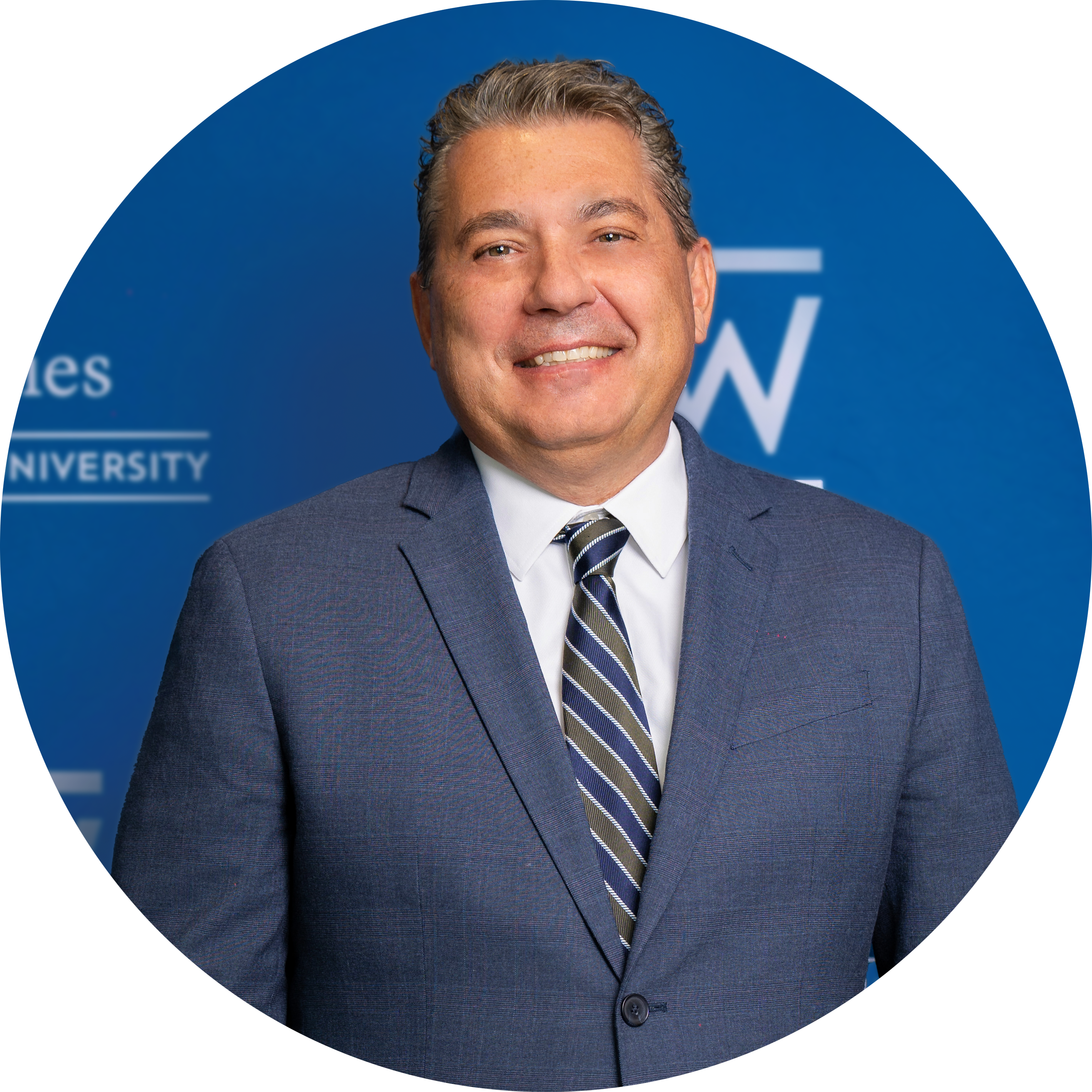
Jeff Delinski
Director of Homeland Security Degree Programs; Assistant Professor
Elaine Lammert
Director of Homeland Security Continuing Education Programs; Associate Professor
Meet Our Industry Experts
Learn from top professionals in the field, including military veterans, emergency management experts, and specialists in CBRNE-WMD defense. These instructors bring a wealth of experience from government, industry, and academia, providing you with the most current and relevant insights.

Matthew E. Smith, MD
WMD/CBRN Medical Specialist & Emergency Medicine PhysicianStudents must complete all three credentials—Leadership and Management, Emerging Threats, and Medical Considerations—to participate in the Capstone.
The capstone is a multi-day in-person tabletop exercise in Washington, D.C., during which students test their ability to respond to and manage mass casualty events. Drawing on all three credentials, students will test their readiness to lead effective CBRNe operations in today’s complex threat environment.
The credentials are noncredit courses. For each credential you will earn 40 contact hours (CEHs) that may contribute towards Continuing Education Units (CEUs), a digital badge, and a GW RevU Micro-Certificate.
If you complete the three credentials and the Capstone, you will receive, in addition to the items listed above, a GW Professional Certificate in CBRNE.
The credentials are ideal for anyone working in the CBRNE environment. From first responders, emergency managers, military personnel, public health professionals, to those who set policy or legislative action that affect CBRNE operations, these credentials are for you.
The program currently offers three credentials:
- Leader and Management of Organizations;
- Emerging Threats and Technology; and
- Medical Management and Pre-Hospital Considerations.
These credentials are designed to be interdependent and prepare you to address the complexities of this threat environment.
The credentials are eight (8) weeks long.
The credentials are primarily delivered asynchronously online, but include synchronous sessions with experts in the field.
For each credential and the Capstone, you will learn 40 Continuing Education Hours (CEHs). These may contribute towards Continuing Education Units (CEUs) with your particular organization. Visit the Continuing Education hours page for more details about how GW RevU will support your professional development journey.
For each credential, you will receive a digital badge and a GW RevU Micro-Certificate.
If you complete the three credentials and the Capstone, you will receive a GW Professional Certificate in CBRNE.
To be eligible for the program, you must meet the following requirements:
- Be in good professional standing and actively working in the field for at least two years;
- Have relevant experience in roles associated with CBRNE threat detection, response, mitigation, or consequence management; and
- Submit a resume and a letter of endorsement from a supervisor or someone in your chain of command.
Registration for each of the credentials can be found on this link: GW RevU | Specialized Training in Chemical, Biological, Radiological, Nuclear, and Explosives Defense.
$399 per credential and $1,195 for the Capstone.
We also offer a Pathway Bundle that allows you to secure your place in all three credentials and the Capstone. If you register for the bundle, your cost would be $2,152, a 10% discount on the entire program!
Yes, discounts are available for the course(s):
- 10% for all GW Alumni, Students, Faculty, and Staff who are appropriately qualified;
- 10% discounts for organizations that send three or more participants (no discounts for the Capstone).

Georgie
- Homeland Security
-
-