- Cybersecurity
-
-
PARTNERS
- Homeland Security
-
-
HOMELAND SECURITY
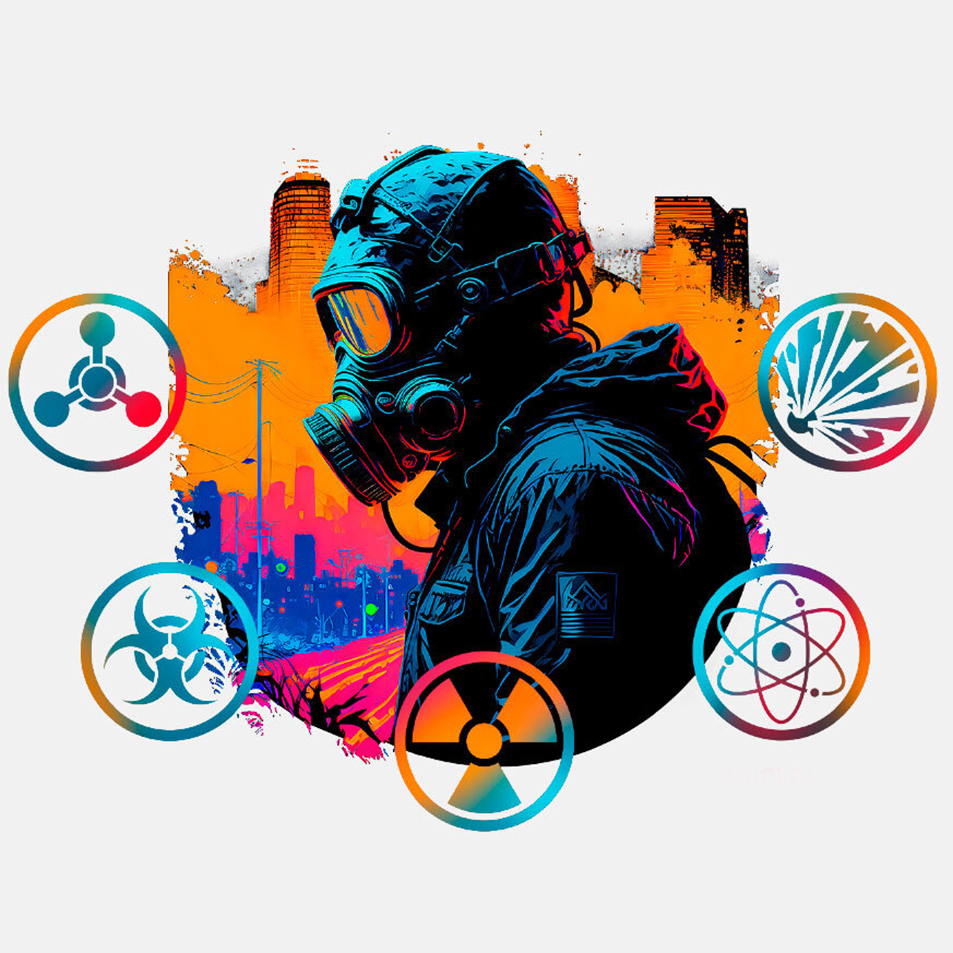
Chemical. Biological. Radiological. Nuclear. Explosive. WMDs. Asymmetric Threats.
The CBRNE-WMD credentials program is a robust training series designed to prepare early and developing professionals for the complexities of a dynamic and evolving threat environment. Three interdependent certificates that deal with policy, mitigation, and emerging threats will propel you towards an immersive capstone in Washington, D.C. and the next steps in your career protecting our nation.
-
-
CBRNE-2: Emerging Threats and Technology (0126)
ABOUT THIS COURSE
Chemical. Biological. Radiological. Nuclear. Explosive. WMDs. Asymmetric Threats.
The CBRNE-WMD credentials program is a robust training series designed to prepare early and developing professionals for the complexities of a dynamic and evolving threat environment. Three interdependent certificates that deal with policy, mitigation, and emerging threats will propel you towards an immersive capstone in Washington, D.C. and the next steps in your career protection our nation.
COURSE REQUIREMENTS
To be eligible for the GW RevU Micro-Credential Program, applicants must meet the following minimum requirements.
- Academic and Professional Standing: Applicants must be in good professional standing and have been actively working in their field of study or service for at least two years.
- Professional Background: Candidates with relevant experience in fields such as healthcare, public health, emergency management, law enforcement, security, engineering, environmental sciences, elected officials, telecommunications, or any other discipline associated with private sector or governmental roles in CBRNE (Chemical, Biological, Radiological, Nuclear, and Explosive) threat detection, mitigation, or consequence management are eligible for consideration.
- Submission of Documents: Each applicant is required to submit a current resume outlining their professional experience. Additionally, a letter of endorsement from a supervisor or someone in their chain of command is mandatory to verify their qualifications and support their participation in the program.
COURSE SYLLABUS
Module 1: Definitions
This module focuses on a detailed exploration of CBRNE-WMD and their evolution in international and U.S. law. It covers historical treaties, including the Geneva Conventions of 1925, which prohibited chemical and biological warfare, and subsequent efforts to control atomic and radiological weapons, notably through the United Nations and U.S. legislation such as the Violent Crime Control and Law Enforcement Act of 1994. The module also discusses various categories of WMD, including chemical, biological, radiological, nuclear, and explosive devices, highlighting their destructive potential, the challenges in controlling them, and the importance of clear definitions across different contexts such as military, law enforcement, and arms control.
- Contrast the various legal definitions of WMD and the rationale behind the variations.
- Elaborate upon the weapons and devices of concern classified as WMD.
Module 2: Authority
This module outlines the various authorities and responsibilities of U.S. government agencies involved in addressing WMD. It explains how these authorities are granted through acts of Congress, executive orders, and appropriations bills. Key federal agencies such as the Department of Defense, Department of Homeland Security, and the Department of Energy play significant roles in prevention, nonproliferation, and response efforts. The module also emphasizes the principle of federalism, where states retain sovereignty and many have their own WMD-related laws. Finally, the module addresses which agencies coordinate efforts to investigate and address responses to WMD incidents including the FBI, CIA, and CDC.
- Identify key mandates, laws, presidential directives, and constitutional authority relevant to CBRNE-WMD operations.
- Evaluate the legal and regulatory frameworks governing CBRNE-WMD prevention, response, and mitigation at the federal, state, and local levels.
Module 3: Incident History
This module provides a historical overview of key incidents involving chemical, biological, radiological, nuclear, and explosive (CBRNE) weapons, focusing on their deployment and impact. Examples include the Mongol siege of Caffa in 1346, where plague-infected bodies were used as biological weapons, and the use of chemical weapons in World War I. Other notable incidents covered include the bombing of Hiroshima and Nagasaki in World War II, Saddam Hussein’s chemical attacks on Kurdish populations, and the smuggling of nuclear material after the collapse of the Soviet Union. The module emphasizes the importance of understanding the type of WMD used, the method of deployment, and whether the attackers achieved their intended goals. It also raises concerns about future risks, particularly with the current geopolitical tensions in Russia and China, where social unrest could lead to the illegal acquisition of WMD materials.
- Analyze historical CBRNE-WMD incidents and lessons learned to inform leadership and policy strategies.
Module 4: Policy
This module outlines the development and implementation of U.S. policies related to WMD within the broader context of national security. It traces the evolution of national security policy, starting with the establishment of the National Security Council, and highlights how WMD policies have become integral to U.S. strategies since 1994. Key components include nonproliferation, counter-proliferation, and consequence management, focusing on preventing the spread of WMDs and addressing threats posed by state and non-state actors. The module also discusses the role of various U.S. administrations, from Clinton to Biden, in shaping WMD policies, emphasizing the importance of international cooperation, intelligence sharing, and proactive measures to ensure national and global security.
- Introduce and interpret presidential policies, laws, and presidential directives about CBRNE-WMD incidents and their implications for operational decision-making.
Module 5: International Treaties
The module provides an overview of key international treaties related to WMD. It begins by discussing the nuclear arms race between the United States and the Soviet Union following World War II, which led to numerous arms control agreements aimed at limiting the proliferation and testing of nuclear weapons. These treaties, many of which were bilateral between the U.S. and the USSR, focused on maintaining a balance of power and included limitations on nuclear weapons, delivery systems, and ballistic missiles. Additionally, the module highlights multilateral agreements such as the Chemical Weapons Convention and the Biological Weapons Convention, which address non-nuclear threats. It emphasizes the role of these treaties in promoting global security and stability.
- Summarize various international CBRNE-WMD treaties, with a focus on the intent and supporting goals.
Module 6: Countermeasures
The module covers various countermeasures to address the threat of WMD from both nation-states and violent extremists. It highlights strategies such as nonproliferation, counter-proliferation, and consequence management to prevent the development and use of WMDs. Key components of these efforts include intelligence gathering, material controls, export regulations, detection capabilities, and response protocols. The module emphasizes the importance of international cooperation and U.S. agencies, including the Department of Energy, Defense, Homeland Security, and the FBI, in implementing these measures. Additionally, it discusses deterrence through advanced ballistic missile defense systems and nuclear posture policies.
- Analyze the steps required for a terrorist incident to reveal prevention or disruption strategies.
- Understand the security challenges in CBRNE-WMD incidents.
- Understand CBRNE-WMD deterrence.
Module 7: Responses
The module discusses the coordinated response to incidents involving WMD, focusing on the tiered structure of local, state, and federal efforts. It highlights how local authorities initiate the response, escalating to state and federal support if necessary. The document emphasizes the importance of the Incident Command System (ICS) and mutual aid agreements, while explaining the roles of federal agencies, such as FEMA, under frameworks like the Stafford Act. It also addresses specific challenges in responding to nuclear, biological, and chemical incidents, stressing the importance of minimizing casualties, restoring infrastructure, and maintaining public trust during recovery.
- Explore the interdisciplinary nature of CBRNE-WMD response and the importance of collaboration and coordination.
- Analyze how resources are pulled into an incident by local authorities and where federal assets are authorized.
Module 8: Future Issues
This module examines future WMD challenges, focusing on technological advancements and geopolitical risks. It highlights dual-use technologies, such as gain-of-function research, chemical processes, and the nuclear fuel cycle, which can be repurposed for WMD development. Emerging technologies like CRISPR and unmanned systems also raise concerns. Geopolitically, it discusses nuclear proliferation risks, state collapses, and nuclear brinkmanship, with potential crises in Russia, Pakistan, North Korea, and Iran. The module emphasizes the need for vigilance and strategic planning to address these evolving threats.
The module concludes with the final project for this micro-credential, where you create a WMD National Strategy proposal based upon the structure presented in previous strategy documents. The project begins with the definition of WMD and includes topics like end states, lines of effort, ends/ways/means, and pillars/foundations. Your final project will be shared with your peers to identify strengths and weaknesses of policy approaches and assess effective countermeasures and proposals.
- Predict how future technologies could stress or even invalidate current CBRNE-WMD policies.
- Create a national strategy proposal for countering WMD threats, incorporating key strategic elements.
RELATED COURSES
Come Explore What GW RevU Can Offer You

Georgie
- Homeland Security
-
-