- Cybersecurity
-
-
PARTNERS
-
Cybersecurity (Coming Soon)
-
CISSP (Coming Soon)
- Homeland Security
-
-
HOMELAND SECURITY
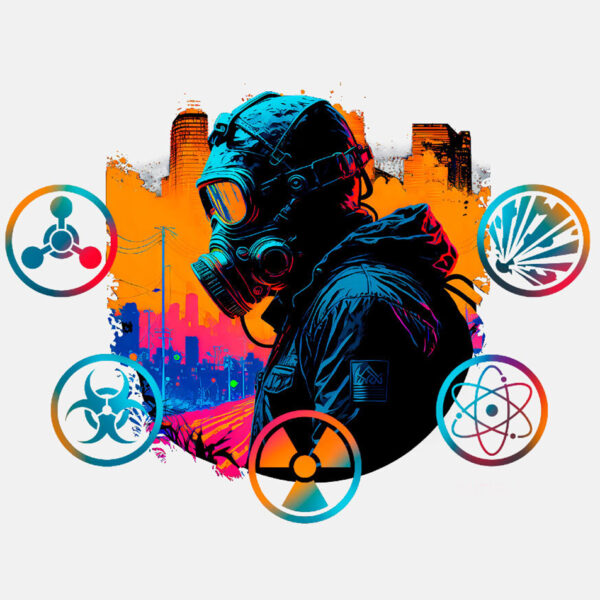
Chemical. Biological. Radiological. Nuclear. Explosive. WMDs. Asymmetric Threats.
The CBRNE-WMD credentials program is a robust training series designed to prepare early and developing professionals for the complexities of a dynamic and evolving threat environment. Three interdependent certificates that deal with policy, mitigation, and emerging threats will propel you towards an immersive capstone in Washington, D.C. and the next steps in your career protecting our nation.
-
-
Security+ Boot Camp (1w) 2026
ABOUT THIS COURSE
Designed for IT professionals seeking a strong foundation in cybersecurity concepts, CompTIA Security+ supports individuals entering or advancing in security-focused roles. This certification builds confidence in applying security best practices and communicating effectively with technical teams, leadership, and organizational stakeholders.
Security+ validates baseline, vendor-neutral knowledge across core cybersecurity domains, including network security, risk management, threat detection, incident response, and governance fundamentals.
Content in this course is:
- Aligned with the CompTIA Security+ exam objectives (SY0-701);
- Designed to reflect real-world, hands-on cybersecurity scenarios;
- Reviewed and informed by subject matter experts with industry and instructional experience; and
- Structured to support learners preparing for entry- to mid-level cybersecurity roles.
CompTIA certifications are globally recognized and widely adopted across industry, government, and academia. Security+ is approved for U.S. Department of Defense (DoD) 8140/8570 compliance and aligned with the Cyber Workforce Framework (CWF), making it a foundational credential for professionals working in regulated or defense-related environments.

Overview
Modality
Online
Format
Asynchronous
Pricing
$2399.00
Partner
RevU
Topic
CompTIA
Featured Courses
General
Information Technology and Engineering
Security+
Course Dates
- Dates: 1/19 – 1/23, 2026
Why Choose GW RevU for Security+ Prep?
- Join the GW Brand – Learn with the credibility and reputation of The George Washington University.
- Expert-Led Instruction – Courses taught by GW faculty with real-world industry experience.
- Interactive Learning – Live, synchronous sessions paired with dedicated exam prep time.
- Flexible Support – Personalized office hours scheduled around your availability.
- Expand Your Network – Connect with peers and professionals in the field.
- Direct Support – Connect with our Cybersecurity experts for one-on-one assistance.
COURSE REQUIREMENTS
CompTIA Security+ Certification Requirements
There are no formal prerequisites for this certification. However, candidates must complete the following steps to earn and maintain the CompTIA Security+ certification:
- Pass the CompTIA Security+ certification examination (current exam: SY0-701);
- Earn the certification upon successful completion of the exam (no separate application process is required);
- Maintain the certification through CompTIA’s Continuing Education (CE) Program;
- Complete 50 Continuing Education Units (CEUs) within each three-year renewal cycle; and
- Submit CEUs and applicable renewal fees through the CompTIA certification portal before the certification expiration date.
Note: While not required, CompTIA recommends that candidates have Network+ (or equivalent knowledge) and approximately two years of experience in IT administration with a security focus.
COURSE SYLLABUS
General security concepts (12%)
- Security controls: comparing technical, preventive, managerial, deterrent, operational, detective, physical, corrective, compensating, and directive controls.
- Fundamental concepts: summarizing confidentiality, integrity, and availability (CIA); non-repudiation; authentication, authorization, and accounting (AAA); zero trust; and deception/disruption technology.
- Change management: explaining business processes, technical implications, documentation, and version control.
- Cryptographic solutions: using public key infrastructure (PKI), encryption, obfuscation, hashing, digital signatures, and blockchain.
Threats, vulnerabilities, and mitigations (22%)
- Threat actors and motivations: comparing nation-states, unskilled attackers, hacktivists, insider threats, organized crime, shadow IT, and motivations like data exfiltration, espionage, and financial gain.
- Threat vectors and attack surfaces: explaining message-based, unsecure networks, social engineering, file-based, voice call, supply chain, and vulnerable software vectors.
- Vulnerabilities: explaining application, hardware, mobile device, virtualization, operating system (OS)-based, cloud-specific, web-based, and supply chain vulnerabilities.
- Malicious activity: analyzing malware attacks, password attacks, application attacks, physical attacks, network attacks, and cryptographic attacks.
- Mitigation techniques: using segmentation, access control, configuration enforcement, hardening, isolation, and patching.
Security architecture (18%)
- Architecture models: comparing on-premises, cloud, virtualization, Internet of Things (IoT), industrial control systems (ICS), and infrastructure as code (IaC).
- Enterprise infrastructure: applying security principles to infrastructure considerations, control selection, and secure communication/access.
- Data protection: comparing data types, securing methods, general considerations, and classifications.
- Resilience and recovery: explaining high availability, site considerations, testing, power, platform diversity, backups, and continuity of operations
Security operations (28%)
- Computing resources: applying secure baselines, mobile solutions, hardening, wireless security, application security, sandboxing, and monitoring.
- Asset management: explaining acquisition, disposal, assignment, and monitoring/tracking of hardware, software, and data assets.
- Vulnerability management: identifying, analyzing, remediating, validating, and reporting vulnerabilities.
- Alerting and monitoring: explaining monitoring tools and computing resource activities.
- Enterprise security: modifying firewalls, IDS/IPS, DNS filtering, DLP (data loss prevention), NAC (network access control), and EDR/XDR (endpoint/extended detection and response).
- Identity and access management: implementing provisioning, SSO (single sign-on), MFA (multifactor authentication), and privileged access tools.
- Automation and orchestration: explaining automation use cases, scripting benefits, and considerations.
- Incident response: implementing processes, training, testing, root cause analysis, threat hunting, and digital forensics.
- Data sources: using log data and other sources to support investigations.
Security program management and oversight (20%)
- Security governance: summarizing guidelines, policies, standards, procedures, external considerations, monitoring, governance structures, and roles/responsibilities.
- Risk management: explaining risk identification, assessment, analysis, register, tolerance, appetite, strategies, reporting, and business impact analysis (BIA).
- Third-party risk: managing vendor assessment, selection, agreements, monitoring, questionnaires, and rules of engagement.
- Security compliance: summarizing compliance reporting, consequences of non-compliance, monitoring, and privacy.
- Audits and assessments: explaining attestation, internal/external audits, and penetration testing.
- Security awareness: implementing phishing training, anomalous behavior recognition, user guidance, reporting, and monitoring.
RELATED COURSES
Come Explore What GW RevU Can Offer You
Some programs may offer scholarships, senior discounts, incentives, or employer sponsorship opportunities. Federal financial aid typically does not apply to noncredit programs.
Tuition varies by program. Course fees are listed in the online catalog. Payment is usually accepted by credit card, e-check, or other approved methods.
Most lifelong learning courses are noncredit, designed for professional development or personal enrichment. Select programs may offer academic credit, or continuing education units (CEUs) or an equivalent (e.g. CEH).
A reliable internet connection, computer or tablet, and a current web browser are typically required. Some courses may require a webcam or specialized software, but these requirements will be listed in the course catalog and additional details provided in the course.
Yes, some programs provide CEUs (CEH), which may be used to meet professional licensing or credentialing requirements. CEU information will be listed in each course description.
Courses range from single-day workshops to multi-week programs. The length and schedule of each course is listed in the course catalog.
Most courses are held on the GW campuses in Washington D.C., the DMV area, or at designated learning centers. Location details, including parking and transportation options, are provided upon registration.
If you have selected a GW RevU course, you can simply click on “My Course” at the top of the page to be taken to your Dashboard where all the courses that you have registered for our listed.
On the other hand, if you are participating in a course provided by one of our partners or in a private instance (e.g. CBRNE) you would have been sent an email with the private URL to access your dashboard. Please search your full email (inbox and spam, etc.) to find the registration email from “Noodle”.
Our programs are open to adult learners from all backgrounds. Some courses may be designed for specific audiences (such as working professionals, senior learners, or pre-college students), but most do not require previous academic experience.
Generally, participants must be 18 or older. Some programs offer special enrollment opportunities for high school students or senior citizens—check individual course details for eligibility.
We offer a variety of noncredit courses, professional certificate programs, workshops, and enrichment opportunities. Options range from short seminars to multi-week courses.
Registration is available online through our course catalog. Simply select the course you’re interested in and follow the enrollment instructions.
If a course reaches capacity, you may be placed on a waitlist. We will notify you if a seat becomes available.
Most courses do not have prerequisites. If a program requires specific background knowledge or experience, it will be clearly stated in the course description.
Refunds are available if you withdraw by the published deadline, usually a few days before the course begins. After the deadline, refunds may not be granted. Please review the course-specific refund policy before registering.
Many programs award a certificate of completion. Professional programs may also issue a digital badge or CEU (or equivalent). Degrees are not awarded through lifelong learning courses.
We offer in-person, online, and hybrid courses. Delivery format will be noted in the course listing.
Yes. If you experience issues with logging in, Zoom, or accessing course materials, our support team is available to help.
You can join our mailing list, follow us on social media, or regularly check our website for updates on upcoming programs.
Yes. We partner with organizations to design and deliver customized training programs. Contact our office to discuss your organization’s needs.
Yes. We are committed to providing accessible learning experiences. Please contact us before your course begins to request accommodations. If you have any questions, please do not hesitate to contact us at revu@gwu.edu.

Georgie
-
-
-